Assets Over Hours
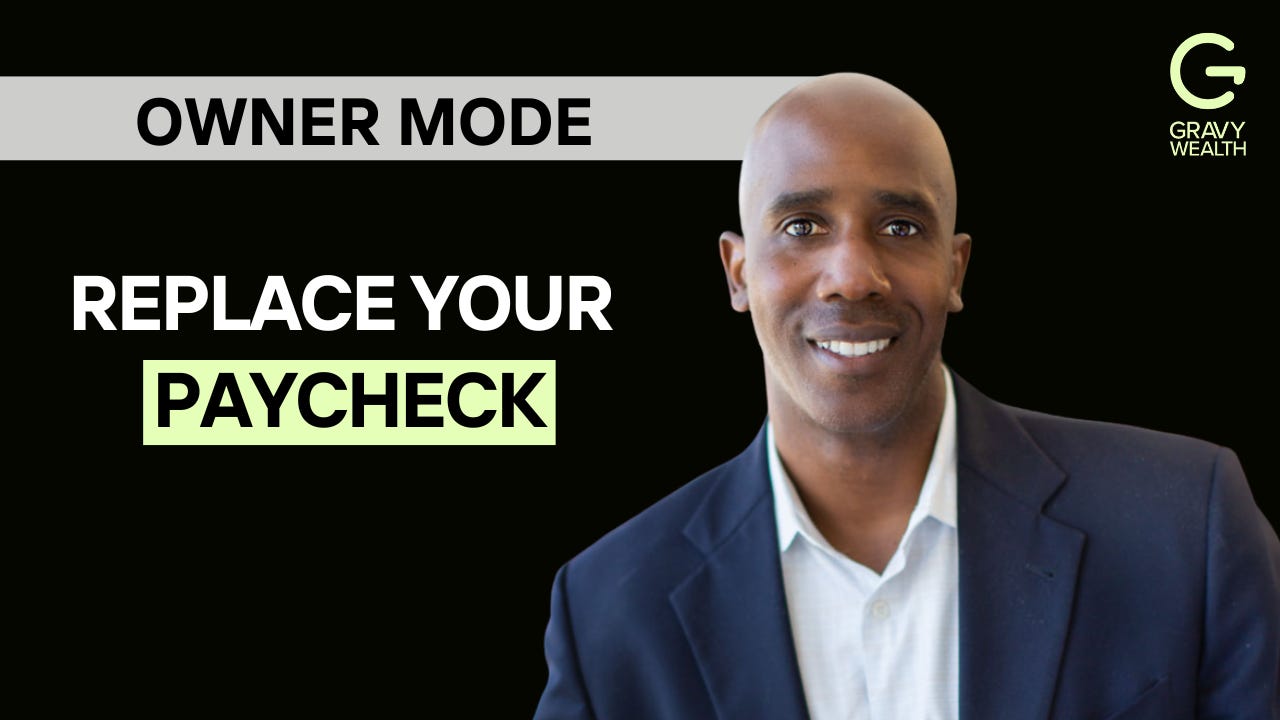
Most people who leave corporate early either sell a company or get lucky on equity. Arthur Johnson did neither. He bought his way out one rental property at a time, over fifteen years, while holding a demanding job the entire way.
The setup is familiar to anyone in the high-earner trap: a strong resume, a strong salary, and a quiet sense that the trade is not working. For Arthur the moment came at a desk at HP at nine at night, far from his family, where he felt like a small cog in a big wheel. He decided that was not how he wanted to spend the rest of his career, and instead of a dramatic exit he started building a second engine on nights and weekends.
That engine was buy-and-hold residential real estate. He could not make the numbers work in Northern California, so he went out of state, scoring the top 300 metros on population growth, job growth, income growth, and affordability. He set a 15% cash-on-cash floor and refused to bend on it. One house, then another, then a portfolio across Texas, Indiana, and Wisconsin.
Two decisions made it survivable next to a career. The first was tax: with real estate professional status in his household and cost segregation on each property, his federal rate fell from 35% to as low as 10% in some years, though the designation usually requires a qualifying member of your household. The second was operational, and it is the one he keeps returning to.
Three takeaways from the conversation
Manage the manager, not the properties
Arthur explains that he never managed the properties themselves. He managed his property managers like direct reports, with weekly check-ins, clear performance goals, and a protocol for anything off-plan. It was the same operating system he used to run strategy inside a company, pointed at 50+ units across three states, and it is what kept the portfolio from becoming a second job.
Hold a return floor and walk past everything under it
Arthur set a 15% cash-on-cash floor and refused to bend on it, even when others told him it was too high. His reasoning was that he needed to be compensated for the risk and the time he was putting in. That one non-negotiable number, held market after market for fifteen years, is what kept the portfolio profitable enough to replace a tech executive salary.
Build the retirement number before you trust it
Arthur describes calculating the exit number in a long conversation with his wife: their actual historical spend, a 20 to 25% bump for the next chapter, and the kids' college handled. They stress-tested it against interest, dividends, and cash flow, found it cleared with a buffer, and he still worked two more years to be sure.
Watch the full conversation
About this guest
Arthur Johnson is an investor, Co-Founder and Managing Partner of Amara Investments, and a Senior Advisor at Grant Thornton. He spent his corporate career at Goldman Sachs, Hewlett Packard, Intuit, Cisco, Andreessen Horowitz, Twilio, and Pure Storage, and built his 50+ unit portfolio across Texas, Indiana, and Wisconsin over fifteen years before retiring from corporate at 52.
Resources
How Gravy Wealth helps high earners shift into ownership: gravywealth.com/build
Book Arthur 1-on-1: gravywealth.com/expert/arthurjohnson
Take the complimentary Ownership DNA Assessment and see how you compare to other professionals making the shift. Methodology reviewed by Archie Jones, Senior Lecturer at Harvard Business School. go.gravywealth.com/DNA
Subscribe to Owner Mode on YouTube: youtube.com/@gravywealth
The Owner Mode podcast on Apple, Spotify, and everywhere podcasts live: gravywealth.com/podcast
Owner Mode publishes a new session every Monday. New here? Subscribe to follow along.
The Owner Mode Memo breaks down the sessions. Gravy Wealth brings the pathways, the tools, the operators, and infrastructure to shift from earner to owner. Explore it at gravywealth.com.
Get the Owner Mode Memo
Insights and strategies to shift into Owner Mode. Free, delivered weekly.